
What We Do
Our Mission
Healing Trauma At Every Level
At PTSD, our mission is to provide accessible, trauma-informed and culturally sensitive psychological support to individuals, communities and systems affected directly or indirectly by community violence. We aim to achieve this by providing targeted interventions at the individual, micro and macro levels.
Bronfenbrenner's Ecological Model
We utilise this model to understand trauma and PTSD not only at the individual level but also within the wider systems and contexts that shape people's lives. We recognise that individuals are deeply affected by their environments, and therefore healing must address both personal needs and the needs of systems surrounding them. By providing targeted support to those directly impacted, while also engaging within the broader community, we can more effectively respond to the cumulative effects of community violence. We understand that just as individuals can be traumatised, so too can systems.
Individual
The person at the centre of the model, with their own biology, identity, experiences and resilience. Trauma may affect memory, emotions and physical health.
Microsystem
The closest relationships and settings, such as family, friends, educational institutions, work, or ends. Trauma can strain these relationships and disrupt daily life.
Mesosystem
The connections between microsystems. For example community violence in the ends can affect performance at school or work.
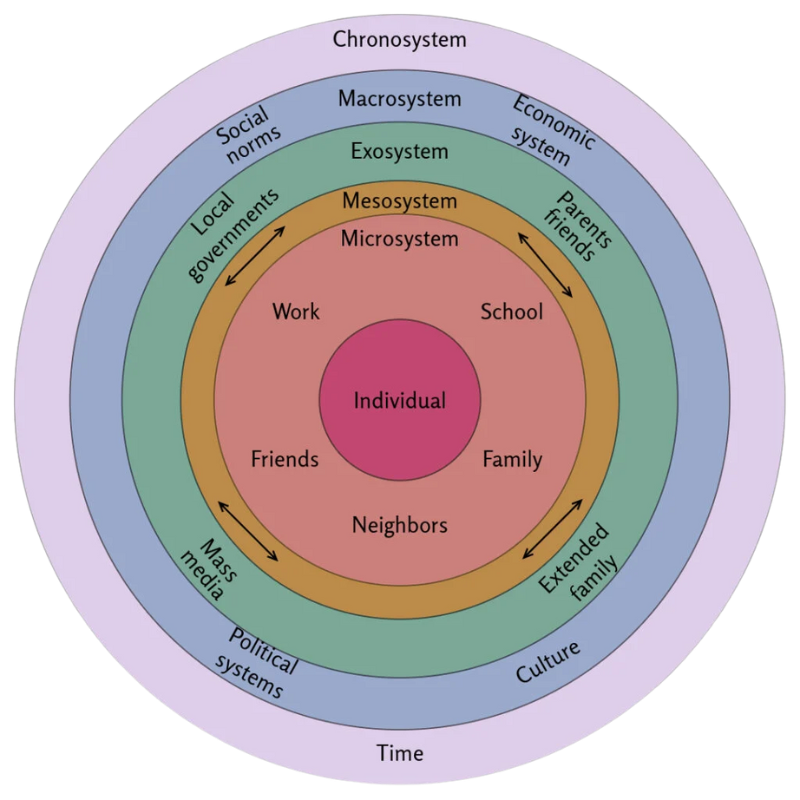
Exosystem
Wider systems that indirectly impact the individual, such as healthcare access, workplaces, and local services. Limited resources or systemic barriers can make healing harder.
Macrosystem
The larger cultural and social contexts, including laws, values, stigma, and systems of inequality e.g. living in a society where community violence is normalised, or where structural inequalities limit safe housing, education and healthcare access.
Chronosystem
The role of time, recognising that trauma's impact can change over life stages, and that historical or generational trauma continues to shape communities.
Healing trauma requires understanding all layers of experience
Our Interventions
This model helps us see how community violence and trauma ripple outwards, affecting families, communities and institutions, as well as how these layers can either support or hinder healing. Here's how we apply this model in practice:
Individual Level Support
We provide trauma-informed and culturally sensitive psychological and therapeutic support to individuals across the lifespan impacted by community violence, both directly or indirectly.
We offer:
- Trauma & PTSD assessments
- Cognitive assessments
- Medico-legal / expert witness reports
- Evidence-based psychological interventions for trauma & PTSD
- Risk assessments and safety plans
Microsystem: Families & Communities
Community violence can contribute to trauma at the community level which impacts family, friends, and the ends.
We offer:
- Clinical supervision
- Reflective practice
- Training and workshops on trauma and PTSD within the context of community violence
Macrosystem: Policy & Systems
Trauma & PTSD cannot be separated from the crises of widening inequalities in health, social, and environmental injustices.
We offer:
- Consultation
- Workshops and presentations
- Research specific to trauma, PTSD and community violence
- Teaching on psychology courses
- Resource development for practitioners
Whether you're seeking support for yourself, your organisation, or your community, we provide culturally-grounded, systemic solutions.
Reach Out